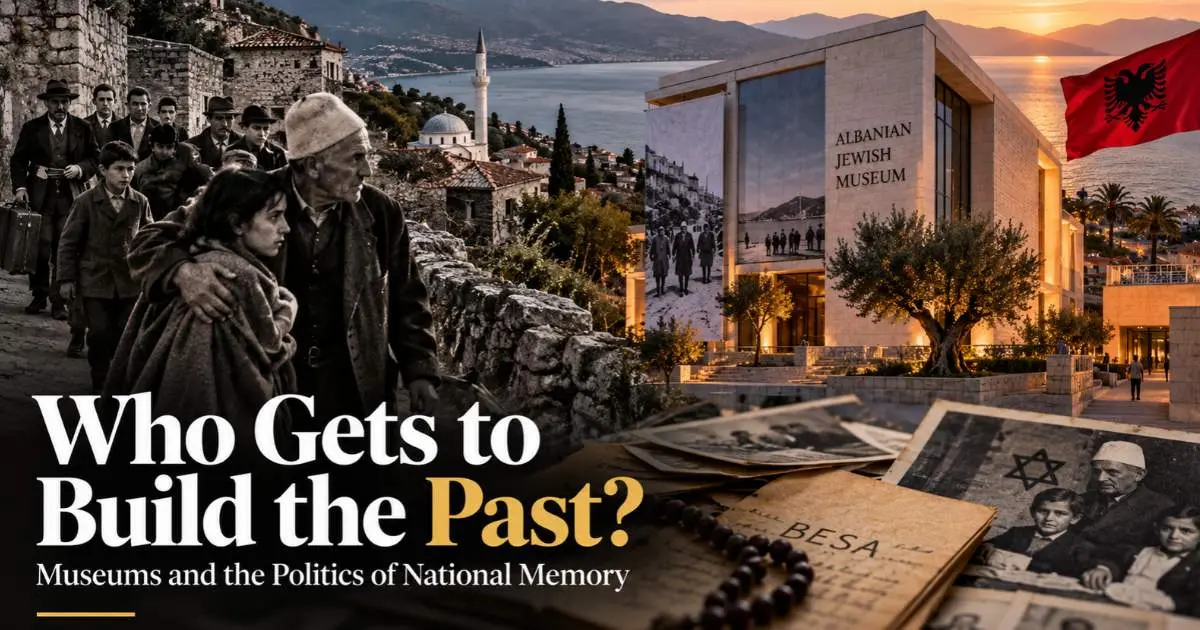
In Albania, a country of roughly 803,000 people during the Second World War, only about 200 were Jews before the conflict. Today, a $6.5 million museum in Vlorë will preserve the story of Jews who lived there and those who found refuge among Albanians. The project raises a question far larger than Albania: why do some memories acquire buildings, budgets and international institutions while other histories, including those of much larger communities, struggle to remain visible at all?
Before it has opened its doors, the Albanian Jewish Museum in Vlorë has already demonstrated something important about museums: they do not simply preserve history after the arguments are over. They can become part of the argument themselves. The Albanian-American Development Foundation has committed $6.5 million to the project, which it describes as a cultural institution, a tourist destination and a component of the revitalisation of Vlorë’s historic centre. Its stated purpose includes telling the story of Jews in Albania, remembering those who found sanctuary there during the Holocaust and presenting Albania’s traditions of solidarity and humanism to an international audience.
The project has also provoked opposition. One prominent claim circulating in Albanian media and social networks held that the museum was replacing or occupying the historic building associated with Klubi Labëria, the patriotic organisation founded in Vlorë in 1908. Available project documents and municipal records indicate otherwise: the former club building and the house being developed as the Jewish museum are separate structures. A factual error helped generate a real political controversy, and correcting it is necessary. Yet the mistake should not prevent a more difficult question from being asked.
That question begins with scale. According to the United States Holocaust Memorial Museum, approximately 200 Jews lived in Albania in 1937 — around 0.02 per cent of the population. Yad Vashem similarly records roughly 200 Jews among a national population of about 803,000, while estimating that hundreds and perhaps more than a thousand Jewish refugees subsequently entered Albania from elsewhere in Europe. Those numbers do not make their lives insignificant, nor do small communities need demographic weight to deserve remembrance. They do, however, change what is historically remarkable about the Albanian case.
The extraordinary story is not that a substantial Jewish population once formed one of the major communities of Albania. It did not. The extraordinary story is what happened when a tiny number of Jews, joined by people fleeing persecution elsewhere in Europe, encountered an Albanian society in which many were willing to shelter them. Albania’s importance in Holocaust memory derives less from the demographic size of its Jewish population than from the behaviour of the society around it.
That distinction opens a larger question about memory itself. Historical importance and commemorative power are not the same thing. Some experiences involving millions of people remain poorly preserved, weakly institutionalised or scarcely known beyond the communities that endured them. Other histories acquire museums, professional archives, international foundations, educational programmes and diplomatic recognition. The question is not which suffering deserves to be remembered. It is what gives some memories institutional power.
Two hundred people and a much larger story
Numbers are an uncomfortable instrument in discussions of memory because they can easily be mistaken for measures of human worth. Two hundred lives do not matter less than two hundred thousand. A persecuted family does not require demographic significance before its experience becomes historically meaningful. Yet numbers matter when institutions make claims about national history, because scale helps distinguish between the history of a country and the history of particular people who lived within it.
Jews had lived in Albanian lands long before the twentieth century. Sephardic Jews arrived in greater numbers in Ottoman territories after their expulsion from the Iberian Peninsula, and Vlorë itself once had a notable Jewish presence. That longer history belongs in any serious museum. But by the eve of the Second World War, the Jewish population of Albania had become exceptionally small. Describing the wartime story without that proportion risks giving modern institutional visibility the appearance of historical demographic weight.
The war changed the significance of that small presence. Jews fleeing Nazi persecution entered Albania from Germany, Austria, Serbia, Greece and Yugoslavia. After German forces occupied Albania in 1943, families and local networks hid Jews, provided food and shelter, helped create false identities and resisted efforts to expose them. Yad Vashem records that almost all Jews within Albania’s borders during the German occupation survived, including both Albanian Jews and refugees. The Albanian case therefore became exceptional not because of how many Jews had historically lived there, but because of what happened to vulnerable people when the machinery of European persecution reached them.
This distinction should alter the centre of gravity of the museum’s story. The rescued cannot be understood without the rescuers. The history of Jews who lived in or fled to Albania during this period is simultaneously a history of Albanian choices under occupation — choices made by Muslims and Christians, by families, officials and individuals whose motives were not necessarily identical. Remembering only the people in danger without fully reconstructing the society that responded to them would preserve the event while thinning out its explanation.
The Muslim society inside the rescue story
One fact is especially important because contemporary European narratives can make it unexpectedly difficult to see: wartime Albania was a Muslim-majority European society. Yad Vashem itself foregrounds this dimension in its exhibition on the rescue, Besa: A Code of Honor — Muslim Albanians Who Rescued Jews During the Holocaust. The significance of that description is not that Muslims alone rescued Jews, or that Albania’s record can be reduced to Islam. Christian Albanians also participated in rescue, while anti-fascism, friendship, local loyalties, compassion and the Albanian tradition of Besa all shaped individual decisions.
But religion cannot simply be removed from the story in the name of universal humanism when rescuers themselves invoked it. Nuro Hoxha, a respected teacher near Vlorë, sheltered Jewish families after the German occupation. His son Sazan later remembered his father as a religious Muslim and explained the family’s protection of Jews through three things placed alongside one another: Besa, friendship and the Quran. In another testimony preserved by Yad Vashem, Lime Balla recalled that the inhabitants of her village were Muslims and that they sheltered Jewish refugees as people under their Besa. Such testimony does not prove a single religious explanation for Albania’s wartime record. It proves something narrower and historically more valuable: for some rescuers, Islamic belief belonged to the moral world in which protection of Jews made sense.
There is a subtle form of historical distortion that occurs when such religious language is replaced by safer abstractions. Calling the rescue simply “humanism” makes the story easier to export internationally, but it can also remove part of the identity of the people whose behaviour is being celebrated. The opposite distortion would be equally misleading: claiming the Albanian rescue as an exclusively Islamic achievement would erase Christian rescuers, Albanian cultural traditions and other motivations. Historical accuracy requires allowing the evidence to remain more complicated than the identities later generations would like to construct from it.
This is also why the Albanian story deserves attention beyond the Balkans. Much contemporary political language encourages Western audiences to encounter Muslims and Jews primarily through conflict: terrorism, antisemitism, Islamophobia, Israel, Palestine, migration and competing historical grievances. Albania offers no sentimental answer to those conflicts, but it preserves a historical scene that does not fit easily inside them: Jews fleeing persecution elsewhere in Europe entering a Muslim-majority European society and, in many cases, finding people willing to hide them. Recovering that scene is not public relations for Islam. It is correcting a historical picture that becomes less accurate when the Muslim identity of many rescuers is treated as incidental.
When memory acquires infrastructure
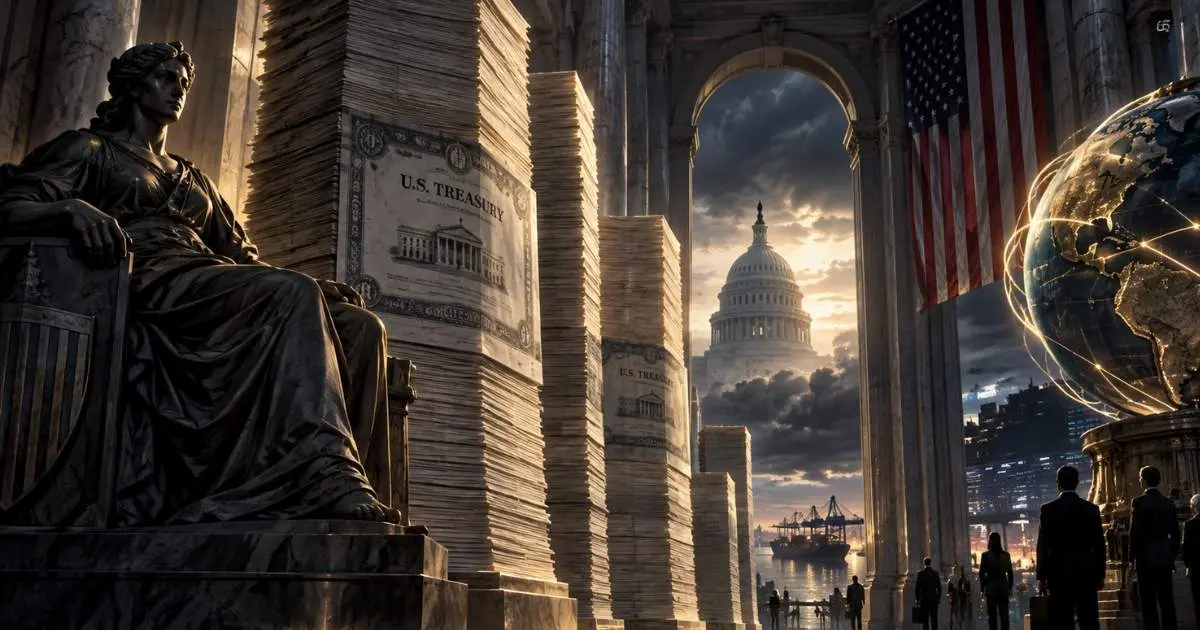
The existence of a $6.5 million museum devoted to this history introduces a different question. The amount itself proves nothing improper. Museums are expensive; restoration, architecture, conservation, research, exhibition design and educational programmes require substantial resources. The Albanian-American Development Foundation openly presents the project as part of a broader cultural and tourism strategy, and international philanthropy has preserved countless sites and archives that governments or local communities could not have maintained alone.
What money changes is not the truth of the history but its ability to endure publicly. A memory with a purpose-built institution, professional curators, international architects, educational programmes, publicity and a place on the tourist map exists differently from one preserved in family testimony, a neglected monument, an underfunded archive or the work of local historians. Both may be historically important, but only one has acquired the machinery to reproduce itself across generations.
This is memory infrastructure. It includes the buildings, money, archives, curricula, commemorative calendars, research centres, foundations and diplomatic networks that make some histories repeatedly accessible. Once such infrastructure exists, a child can encounter the history on a school visit, a tourist can discover it without prior knowledge, a foreign journalist can report it, scholars can build careers around its archives and governments can incorporate it into international cultural diplomacy. Memory ceases to depend solely on people remembering. Institutions begin remembering on their behalf.
The resulting inequality is rarely captured by arguments over whether a particular museum is justified. A museum may be entirely justified and still reveal a larger imbalance. Across the world, communities far larger than Albania’s pre-war Jewish population have experienced persecution, displacement, cultural destruction or political exclusion without acquiring comparable international institutions of remembrance. Some histories possess major museums in multiple countries; others struggle to preserve documents in the places where the events occurred. The existence of the first does not cause the neglect of the second, and one group’s memorial should not be treated as property stolen from another. Yet the disparity remains analytically important.
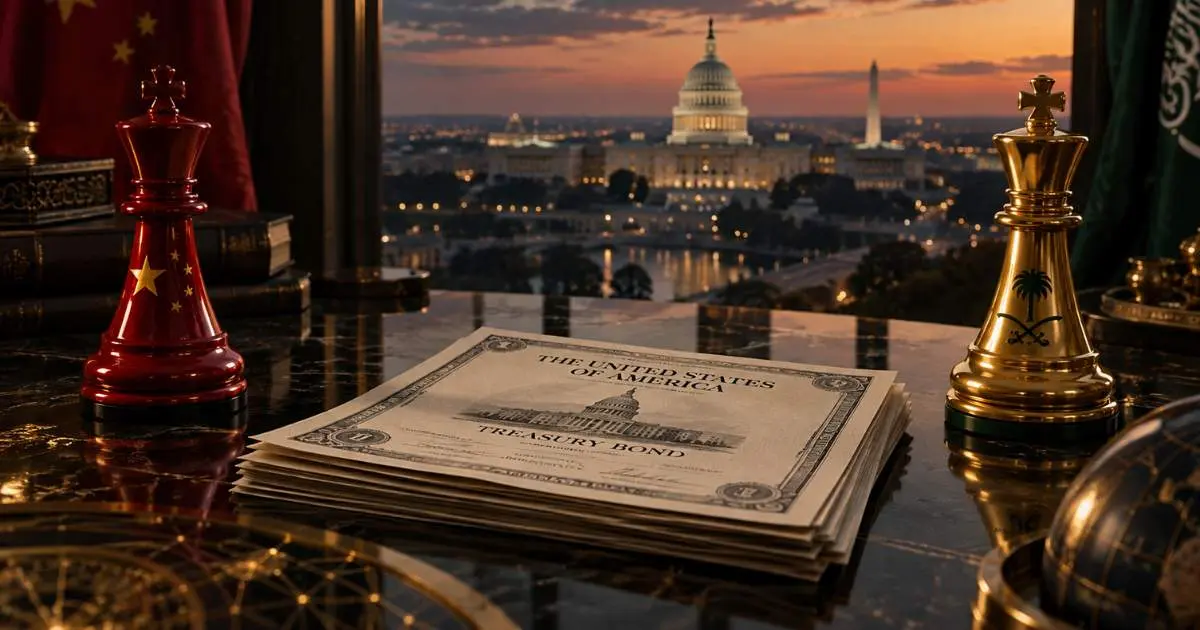
Historical suffering therefore has an afterlife shaped by resources. The severity of an injustice does not automatically determine the strength of the institutions that will remember it. Visibility also depends on states, donors, diaspora networks, universities, foundations, geopolitical relationships, cultural prestige, tourism, advocacy and the ability of a historical narrative to travel internationally. Some memories become institutionally wealthy; others remain institutionally poor. That is not a ranking of suffering. It is an observation about power.
Who gets to make memory permanent?
Museums make this power unusually visible because they turn an interpretation into architecture. A book can disappear from circulation and an argument can be forgotten; a building occupies land. It acquires employees, maintenance budgets, institutional partners and an expectation of permanence. The decision to create a museum is therefore not merely a decision that something should be remembered. It is a decision that society should construct machinery for continuing to remember it.
The Albanian Jewish Museum provides an unusually clear example precisely because the demographic numbers are so small. If approximately 0.02 per cent of Albania’s population was Jewish before the war, population size alone cannot explain why this particular history now supports a multimillion-dollar institution. Nor should it. The Holocaust gives the story enormous international moral significance, Albania’s rescue record gives it unusual historical interest, and the narrative connects the country to global networks of Holocaust remembrance, Jewish history and international cultural diplomacy. The museum may also serve Albania’s own interest in presenting a little-known and admirable part of its past to the world.
None of those factors is sinister. Together, however, they demonstrate that commemorative power is produced by something more complicated than historical scale. A small community can become central to an internationally legible story, while a much larger community elsewhere can remain nearly invisible if its history lacks comparable institutional support. The difference is not necessarily a conspiracy, preference or deliberate act of exclusion. Often it is the cumulative result of who possesses funding, archives, political access, international partners and a narrative capable of entering existing systems of recognition.
This is why the most revealing question is not “Why does this group get a museum?” Such a question easily degenerates into resentment and a competition between victims. The more useful question is: what gives a memory the capacity to become permanent? Once framed that way, the analysis can be applied equally to Holocaust remembrance, colonial violence, slavery, indigenous dispossession, communist repression, religious persecution, forced migration and histories that have barely entered international consciousness. The object of scrutiny is not the identity of the remembered people but the machinery through which remembrance acquires power.
Memory inequality without a conspiracy
The language of influence requires particular care here. When one history appears exceptionally well funded, it is tempting to leap from institutional strength to claims about hidden control. That shortcut explains too much and therefore explains very little. Museums normally emerge through identifiable mechanisms: donors contribute money, governments grant permissions, foundations organise projects, architects compete for commissions, scholars shape exhibitions, local authorities integrate sites into urban plans and international networks provide expertise or prestige. Power can be substantial while remaining visible.
Indeed, the visible mechanisms are often more interesting than theories of secret influence. AADF describes the Vlorë museum as a cultural hub, a source of local pride, a tourist destination and a means of presenting Albania’s relationship with Jews to the world. The winning architectural proposal came from the Israeli firm Kimmel Eshkolot Architects after an international competition. Albanian authorities participate in the broader institutional setting of the project. None of this demonstrates that an outside actor controls Albanian historical memory. It demonstrates something more ordinary and more consequential: public memory is often produced through partnerships in which money, expertise, state authority, tourism and international reputation meet.
That structure creates what might be called memory inequality without censorship. Nobody needs to prohibit a neglected history. It can simply lack a building. Nobody needs to order schools to forget it. There may be no educational programme through which students encounter it. Nobody needs to destroy its archives. They can remain uncatalogued, untranslated or inaccessible. Over decades, the difference between a history supported by institutions and one dependent on private memory can become enormous even if both remain legally available to everyone.
This mechanism also prevents an easy moral conclusion. The appropriate response to unequal remembrance is not to dismantle institutions that successfully preserve history. It is to notice what their success teaches us about histories that remain institutionally weak. If a museum demonstrates how architecture, philanthropy, education and international networks can protect memory from disappearance, the lesson should not be that this memory has received too much. It should be that other histories may have received far too little.
A museum can preserve history and build a national image
There is another layer to the Vlorë project because the museum is not intended solely to remember Jews. AADF explicitly presents it as a way to showcase Albania’s traditions of solidarity and humanism. The institution therefore looks in two directions at once: toward people who were vulnerable during the Holocaust and toward the country that wants its response to that vulnerability remembered.
There is nothing inherently improper about this. Museums routinely tell societies about themselves through their encounters with others. The difficulty begins when an act of commemoration becomes a certificate of inherited virtue. The Muslims and Christians who sheltered Jews under occupation made choices in particular circumstances and accepted particular risks. Their descendants do not automatically inherit their courage, just as later governments cannot convert individual moral decisions into permanent evidence of national goodness.
This is the difference between remembering virtue and owning it. A serious museum can celebrate Nuro Hoxha without implying that every Albanian shared his courage. It can explain Besa without turning Albanian culture into a mythology of innate tolerance. It can recognise Islamic conviction where the evidence supports it without presenting Islam as the sole cause of rescue. It can honour Jewish survival without retroactively enlarging the demographic place of Jews in Albanian society. Each restraint makes the history richer because it prevents the institution from converting complicated human decisions into a national advertisement.
The most revealing test may therefore be how the museum handles context. Will visitors understand that the Jewish population before the war was around 200? Will they understand that refugees arrived from elsewhere in Europe? Will they encounter Albania as a Muslim-majority society with significant Christian communities rather than as a religiously blank stage on which generic “humanism” occurred? Will individual rescuers be allowed their own stated motives? These questions cannot be answered fairly before the museum opens, but they provide a standard by which its eventual narrative can be judged.
A false claim can conceal a legitimate question
The dispute over Klubi Labëria illustrates why criticism of memory projects also requires discipline. The claim that the Jewish museum was replacing the historic club building appears to be factually wrong. Project documents and municipal records identify separate buildings, and the former club building is associated with the existing Ethnographic Museum. A politically useful mistake does not become true because the underlying concern about heritage is sincere.
Yet correcting the building claim does not settle every question. Residents can reasonably ask how a major new institution will alter the historical centre, how public space is allocated, which heritage projects receive substantial investment and how decisions about culturally significant locations are made. They can ask why one history acquires major institutional backing while another depends on weaker local resources. Those questions should stand or fall on evidence rather than being dismissed because some people attached them to a false claim.
This is where debates over museums frequently become distorted. Supporters may treat criticism as hostility toward the people being commemorated; opponents may treat every correction as proof that powerful institutions are suppressing dissent. Both reactions collapse distinct questions into camps. A person can support preserving the history of Jews in Albania while questioning the political economy of commemoration. A person can defend Albanian patriotic heritage while rejecting false claims about the museum site. Intellectual independence begins when no position requires purchasing an entire package of beliefs.
The principle applies beyond Vlorë. Memory has stakeholders, but it should not have an absolute owner. Governments possess legal authority over public institutions; donors can make projects possible; local communities possess knowledge and attachment; historians bring evidentiary discipline; minorities have experiences that majorities may have ignored. None of these forms of standing should become a monopoly over meaning. The strongest institution is not one protected from argument but one capable of preserving evidence while surviving it.
The past has its own political economy
The politics of memory is often described as a struggle over narratives, as if societies simply compete to tell different stories about the same events. That is only half the problem. Narratives do not enter public life with equal resources. Some arrive with foundations, museums, academic programmes, government recognition, translation networks and international days of commemoration. Others survive in oral history, small associations, local archives or communities whose political influence is limited.
That is why the question raised by Vlorë reaches far beyond one museum. Who gets to build the past? The answer is not simply the group whose history is most important, the group that suffered most, or the group with the largest historical population. The past that becomes most visible is often the past that can acquire institutions capable of carrying it forward.
This does not make the Albanian Jewish Museum illegitimate. On the contrary, the history it preserves contains something genuinely remarkable: during an era when Jews were being hunted across Europe, people in a Muslim-majority Balkan society, including rescuers who understood their actions partly through Islam, helped vulnerable neighbours and refugees survive. That story deserves to be known. Its power does not require pretending that Albania once contained a large Jewish population, and it does not require stripping the rescuers of the identities through which some of them understood their own actions.
But the museum’s very existence should encourage a second act of curiosity. Around the world are histories involving communities larger than Albania’s pre-war Jewish population, including communities subjected to persecution, dispossession or cultural destruction, whose memories possess far less institutional protection. Their relative invisibility does not prove that somebody deliberately silenced them. It reveals that remembrance, like almost everything else that survives across generations, requires resources.
A society concerned with historical justice should therefore ask more than whether a particular museum tells the truth. It should ask which histories possess the means to become museums in the first place. That question shifts attention away from a competition over whose suffering matters and toward the structures that decide whose past remains easy to see.
The lesson from Vlorë is consequently larger than Albania, Jews or Muslims. Historical memory has an economy of its own. Money cannot change what happened, but it can build the institutions through which what happened remains visible. Political recognition cannot manufacture courage retrospectively, but it can decide which acts of courage become internationally known. A museum cannot own the past, but it can give one part of the past an address, a staff and a future.
The task is not to deny any community that future. It is to understand why so many others have never been given one.